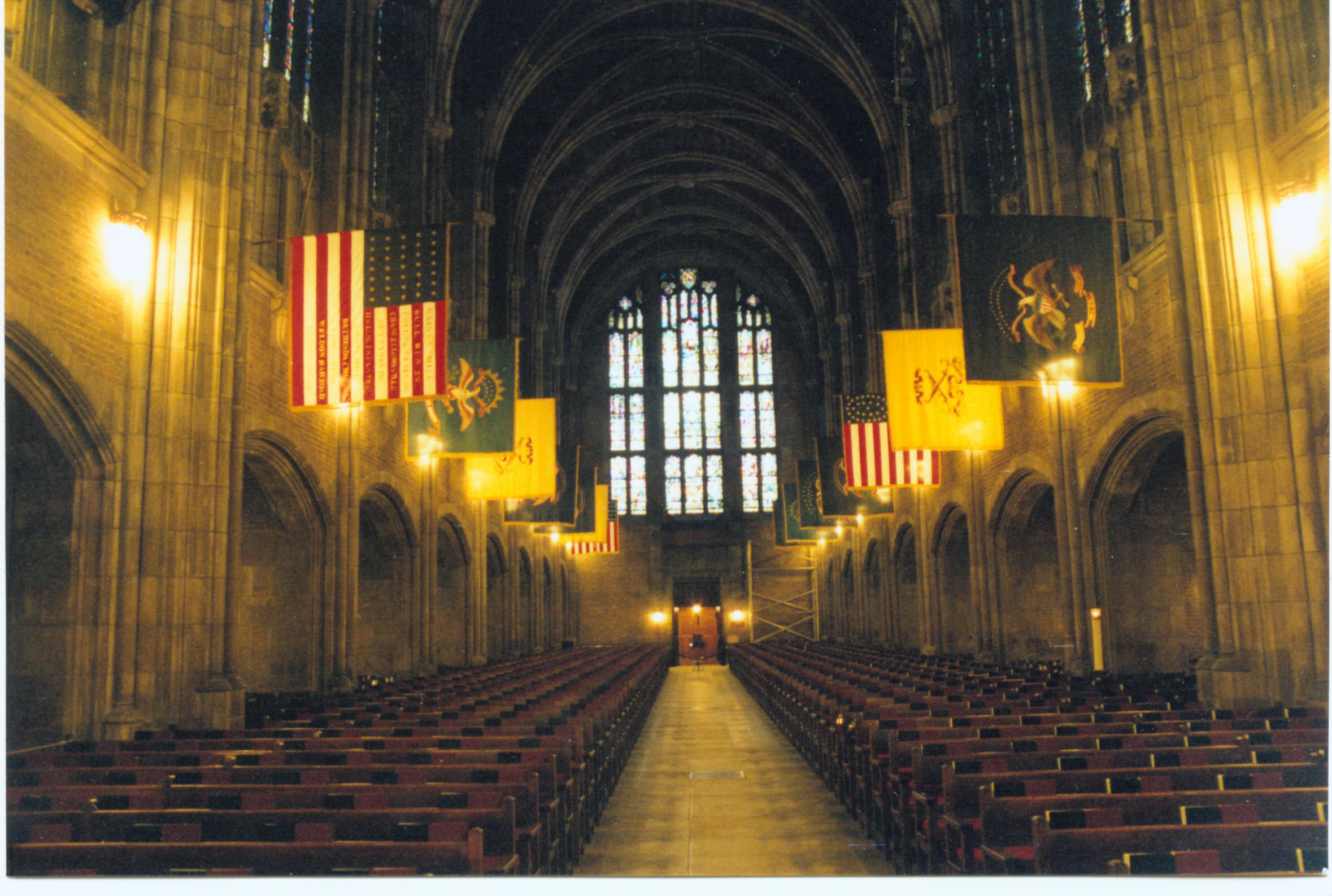
Correct Appearance of British Colours
Fimbriations and St Andrew's Cross
Rococo Pattern
Late-Revolutionary War Pattern
1801 and Union with Ireland
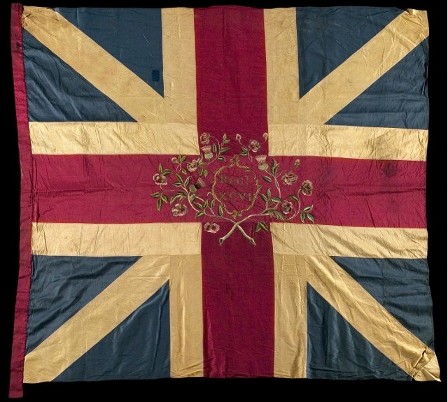
Apart from the oversized central design, most reconstructions of period British colours under-size the width of the white fimbriations and over-size the width of the St Andrew’s cross. According to Napier’s standard drawing, the fimbriations—the white strips that separate the red cross of St George from the blue field of the flag—were to be five inches in width. The white corner-to-corner St Andrew’s cross was to be nine inches wide. The unions of the regimental colours were simply small editions of the King's colour with all parts roughly in the same proportions. From 1747 to 1772 or so, these proportions seem to have been fairly carefully followed.
During most of the period 1760-1786, however, many colours were made with the fimbriation wider than called for, and the St Andrew’s cross much narrower. This was probably due to some supposed economy in using the standard widths of silk, but this is merely speculation. About 1790 the St Andrew’s cross again began to be made as per Napier’s warrant, only to be superceded in 1801 by the need to include the red cross of St Patrick counter-charged with it. The white fimbriation on either side of the St George’s cross on King's colours continued to be made about six inches wide well into 19th century, though there are examples of colours with the correct five inches.
From fairly early on most British colours seem to have been made by a relatively small number of reputable firms in England and Ireland. Patterns of design and workmanship are clearly evident—in fact the quality control among colors made to the same pattern is quite remarkable. And while Colonel Napier’s drawings would seem to impose a specific interpretation of the Union wreath, it is clear that different firms vied for dramatic effect while staying within the letter, if not the spirit, of the law. The earliest authenticated colors comport reasonably well to Napier’s drawings, but by the time of the American War for Independence the central wreaths had expanded in richness, complexity, and overall size.
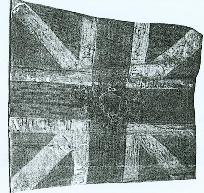
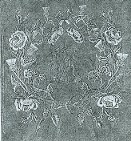
Top left: King's colour, 9th Foot, 1772. Although the photo is not very good, it can be seen that no part of wreath intrudes onto white fimbriation. The St Andrew's cross is still somewhat wider than the fimbriations. (Regimental History, the Norfolk Regt, date unk, c. 1930)
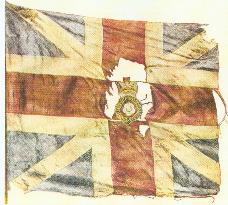
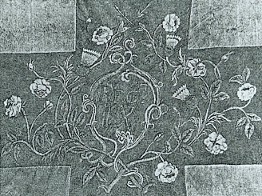
Middle left: King's colour, 7th Foot, the Royal Fusiliers, 1775. Captured 1775; original colour at West Point. Note St Andrew's cross is virtually same width as fimbriations, which are almost exactly i/2 the width of the central cross. Note relative size of regimental badge--hardly larger than the width of St George's cross. (Ralph Henry Gabriel (ed) The Pageant of America. A Pictorial History of the United States, 15 Vols., 1925-6)
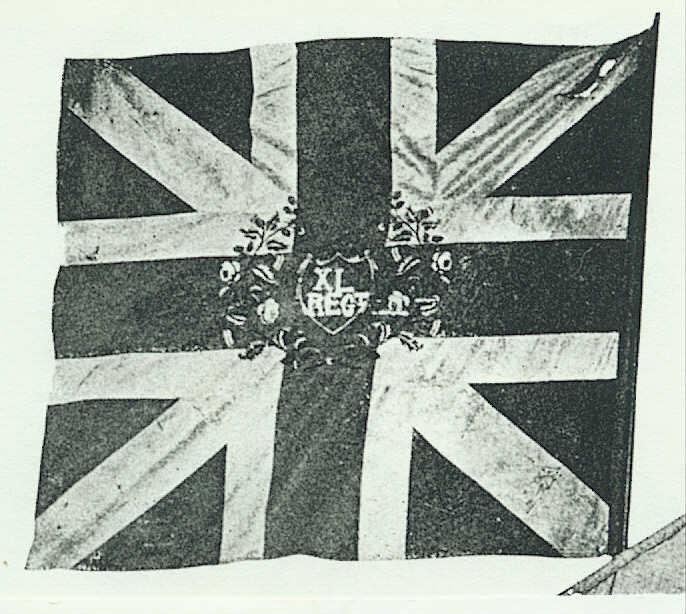
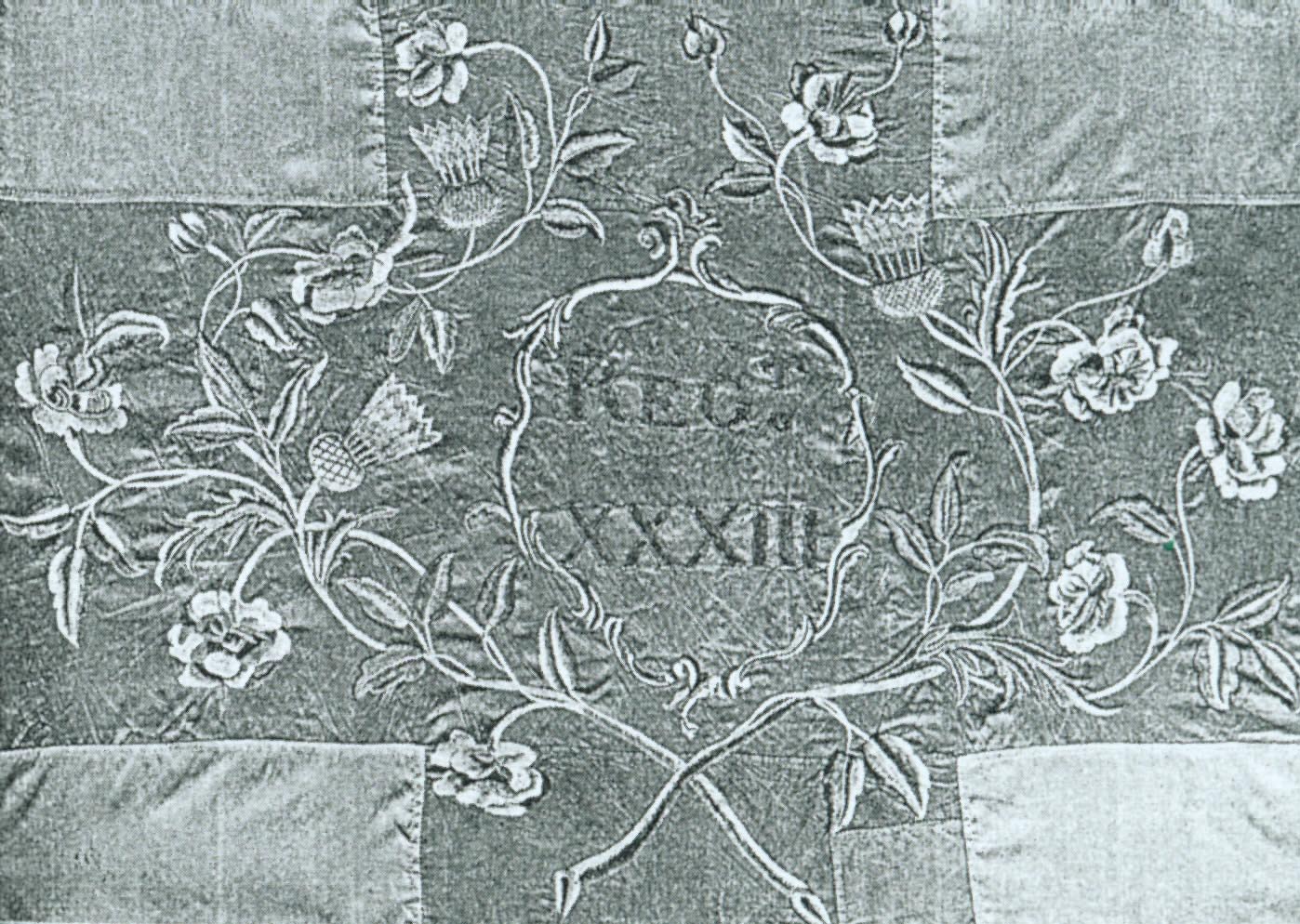
Lower left: King's colour, 2nd Battalion, 40th Foot, 1798. Note fimbriations still wider than Napier's standard drawing, St Andrew's cross about correct. Wreath spills over into white fimbriations, but does not reach near St Andrew's cross or blue field of colour. (Regt History, date unk)